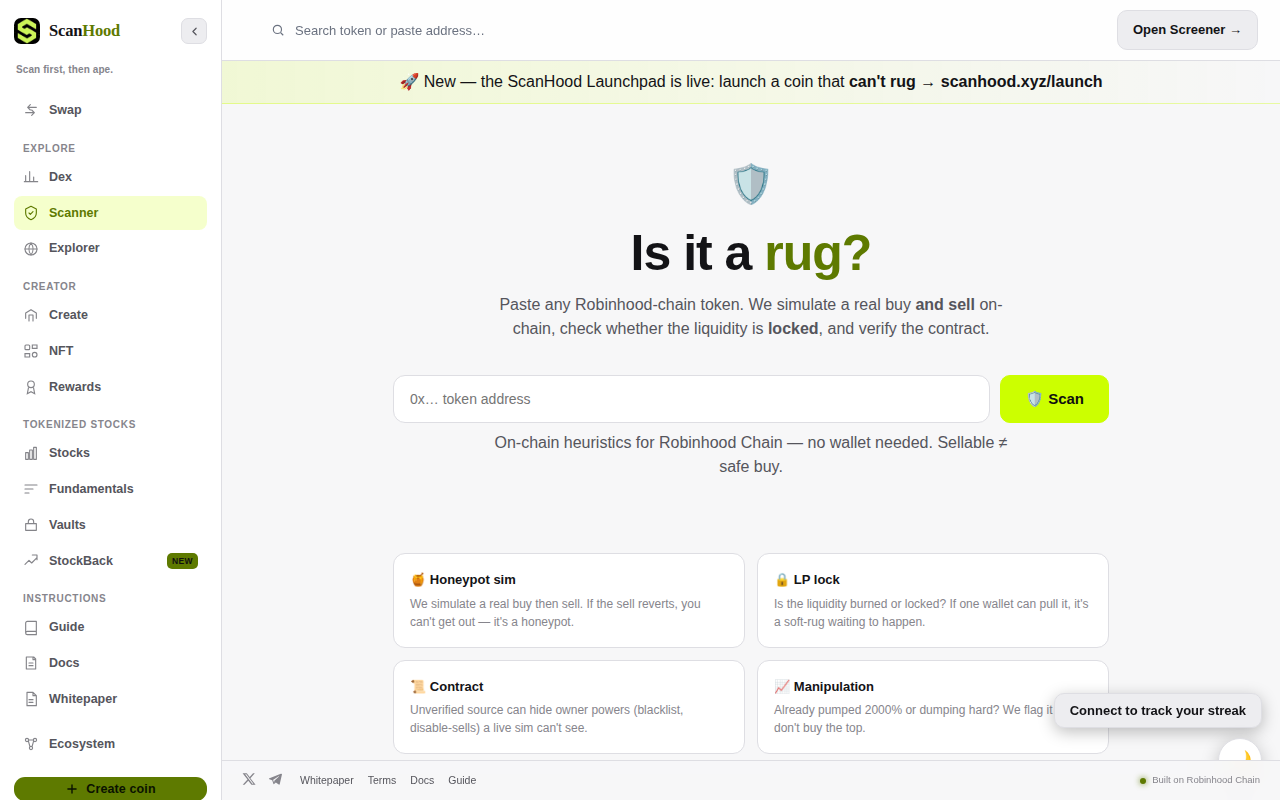
ScanHood’s dashboard displays the pass, caution, and danger tallies for Robinhood‑Chain tokens on November 15, 2026.
SCANHOOD FLAGS 725 ROBINHOOD-CHAIN TOKENS, 3% FAIL RUG CHECK
*ScanHood’s live scanner evaluated every Robinhood‑Chain token on 2026‑11‑15. Only 214 passed, while 489 raised caution and 22 were marked danger. The data shows a persistent rug‑risk environment.*
On November 15, 2026, ScanHood completed its most comprehensive safety sweep of the Robinhood Chain. The scanner examined every token—725 in total—using a real‑time buy‑and‑sell simulation, liquidity‑lock verification, and contract audit. The results paint a stark picture: only a fraction cleared all checks, while the majority raised red flags. Investors scanning the market for quick gains now face a quantified risk landscape, where a 3.0% failure rate translates into dozens of tokens that could vanish overnight. The data underscores the need for rigorous due diligence beyond surface‑level sellability.
What did the ScanHood tally reveal?
The daily safety scan processed 725 tokens on the Robinhood Chain. Of those, 214 cleared every check, meaning they passed the honeypot simulation, liquidity‑lock verification, and contract audit. 489 tokens triggered a caution flag, indicating potential red flags such as unverified contracts or soft‑rug conditions. The scanner labeled 22 tokens as danger, suggesting a high probability of a rug pull or locked liquidity that can be withdrawn by a single wallet. The overall failure rate sits at 3.0%, a metric that signals a non‑trivial risk for investors who rely on superficial sellability.
How does ScanHood determine a rug risk?
The platform runs an on‑chain buy‑then‑sell simulation. If the sell transaction reverts, the token is flagged as a honeypot—an exit‑blocked trap. It then checks whether liquidity is burned or locked; a single‑wallet control marks a soft‑rug risk. Finally, the scanner inspects contract verification; unverified sources can conceal owner powers like blacklisting or disabling sells. These heuristics operate without a wallet, delivering a transparent risk profile for each token.
Why does a caution flag matter to traders?
A caution flag means the token passed the basic sell test but exhibits warning signs. Common triggers include contracts that are not verified, liquidity that is not fully locked, or recent price spikes that suggest manipulation. The scanner also notes tokens that have already pumped dramatically—some reports mention 2000% gains—raising the likelihood of a rapid dump. Traders who ignore caution flags risk buying at a peak only to watch the price collapse when hidden controls are exercised.
What options do developers have after a scan?
ScanHood now offers a launchpad that promises a “cannot rug” token. Developers can submit a contract, lock liquidity, and receive a verification badge before release. The service aims to reduce the pool of dangerous tokens by enforcing best practices at launch. While the launchpad does not guarantee market success, it provides a clear path to avoid the pitfalls highlighted by the daily scan.
Frequently asked questions
How many Robinhood‑Chain tokens failed ScanHood’s rug check on 2026‑11‑15?
3.0% of the 725 tokens scanned failed the rug check, which translates to a small but significant number of risky assets.
What does a caution flag indicate in ScanHood’s report?
A caution flag means the token passed the basic sell test but shows warning signs such as unverified contracts, soft‑rug liquidity, or recent extreme price movement.
Can developers avoid rug risk using ScanHood’s services?
Yes, ScanHood offers a launchpad that enforces liquidity locks and contract verification, aiming to launch tokens that cannot be rugged.
The ScanHood report is a wake‑up call for anyone trading on the Robinhood Chain. With 489 tokens flagged for caution and 22 marked danger, the ecosystem remains riddled with hidden traps. The new launchpad offers a proactive route for developers, but the onus remains on traders to heed the scanner’s warnings. Ignoring these signals invites loss; heeding them could preserve capital in a volatile market.
Sources: ScanHood live scan data (https://scanhood.xyz/scanner/)