ScanHood's live scanner categorized 152 tokens as safe, 584 as caution, and 58 as danger on November 20, 2026.
SCANHOOD FLAGS 7.3% OF 794 ROBINHOOD-CHAIN TOKENS AS RUGS
*ScanHood's live scanner evaluated 794 Robinhood‑Chain tokens on 2026‑11‑20. Only 152 passed, while 584 earned caution and 58 were marked danger. The 7.3% failure rate signals a growing rug‑pull threat.*
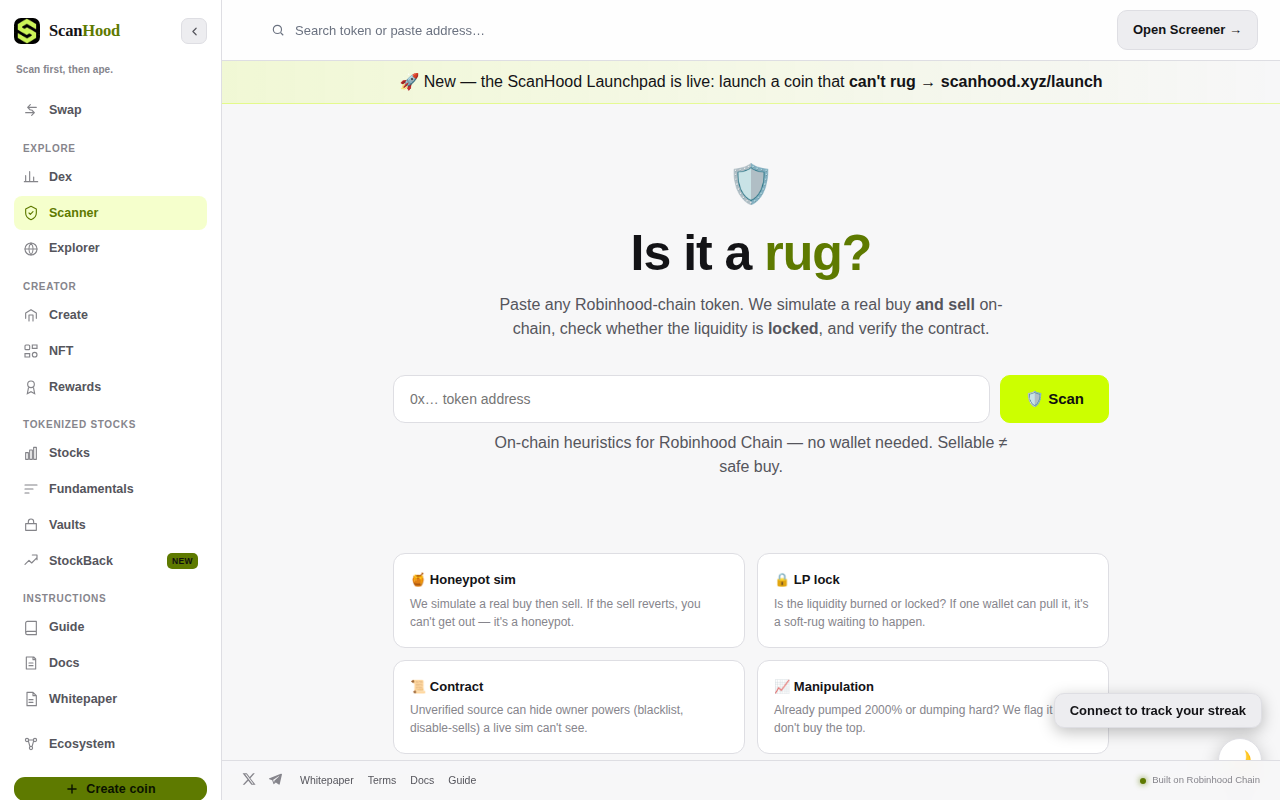
On November 20, 2026, ScanHood's live scanner processed 794 tokens on the Robinhood Chain. The tool flagged 152 as safe, 584 with caution, and 58 as danger. Seven‑point‑three percent of the tokens failed the Rug Check, a metric that signals a high likelihood of a honeypot or liquidity pull. The data arrives as DeFi investors scramble for reliable safety nets amid a flood of new launches. ScanHood promises on‑chain simulation of buys and sells, liquidity lock verification, and contract scrutiny without requiring a wallet. Its real‑time alerts aim to separate genuine projects from those primed to rug.
What did ScanHood detect on the Robinhood Chain on 2026‑11‑20?
The ScanHood scanner processed 794 tokens in a single day. Of those, 152 tokens passed the safety check, meaning they showed no immediate red flags. A large majority, 584 tokens, were flagged with caution, indicating potential issues that merit further scrutiny. The scanner marked 58 tokens as DANGER, the highest risk tier. Overall, 7.3% of the tokens failed the Rug Check, a metric that flags honeypot behavior or liquidity vulnerabilities. The breakdown highlights that while a minority are clean, most new tokens carry warning signs.
How does ScanHood determine a rug risk?
ScanHood runs an on‑chain simulation that mimics a real buy followed by a sell. If the simulated sell reverts, the token is classified as a honeypot because investors cannot exit. The tool also checks whether liquidity is burned or locked; a single wallet that can move the liquidity signals a soft‑rug risk. Contract verification looks for hidden owner powers such as blacklisting or disabling sells. Finally, ScanHood flags tokens that have already seen extreme price moves, like a 2000% pump, to warn of possible dumping. All checks run without requiring a user wallet.
Why does a caution flag matter for investors?
A caution flag means the token passed the basic safety simulation but exhibits one or more risk indicators. Investors seeing a caution should expect possible manipulation, soft‑rug scenarios, or contract quirks that could affect liquidity. The flag serves as an early warning, urging deeper due diligence before committing capital. In a market where sellability does not equal safety, the caution tier helps separate projects that are merely untested from those that may harbor hidden owner controls or volatile price histories.
Can developers launch a rug‑proof token on ScanHood?
ScanHood recently launched a dedicated Launchpad that promises to help creators issue coins that cannot rug. The platform integrates its real‑time safety scanner into the launch workflow, ensuring that liquidity is locked and contract code is verified before the token goes live. By requiring a simulated buy‑sell test and LP‑lock confirmation, the Launchpad aims to eliminate the most common rug‑pull vectors. While no system can guarantee absolute safety, the Launchpad offers the strongest on‑chain safeguards currently available.
Frequently asked questions
How many Robinhood‑chain tokens did ScanHood scan on 2026‑11‑20?
ScanHood scanned 794 tokens on that date.
What percentage of the scanned tokens failed the Rug Check?
7.3% of the tokens failed the Rug Check.
How many tokens were flagged as DANGER?
58 tokens were flagged DANGER.
The ScanHood snapshot underscores a volatile landscape on the Robinhood Chain. With only a fraction of tokens passing cleanly, investors must treat caution flags as serious warnings. The new Launchpad offers a path to more secure token issuance, but the onus remains on traders to verify each project's risk profile. As the ecosystem matures, tools like ScanHood will be essential in filtering out rug pulls before they damage capital and confidence.
Sources: [ScanHood live scan data]